Introduction: Not Your Typical Soapy Drama
Japan in the 1970s and 1980s pulsed with technology booms and vibrant urban life. Yet, beneath the gleaming surface, lurked chilling true crime stories that rival the darkest fiction. Decades before serial crime podcasts captivated global audiences, Japan was shaken by a bizarre and brutal case: the Kotobuki Soap Murders. Don’t be misled by the innocuous name – this wasn’t a quirky drama, but a forgotten tragedy steeped in mystery and horror. Step into a Japanese noir world where the stains of these shocking Tokyo crimes proved impossible to wash away.
What Were the Kotobuki Soap Murders? Unpacking a Dark Postwar Secret
Let’s cut through the confusion: the Kotobuki Soap Murders had nothing to do with cleansing products, killer bubbles, or lethal bath time. The grim name is a disturbing misnomer, born from a twisted sense of humor referencing the location – the Kotobuki Maternity Home (Kotobuki San’in) in Tokyo. Forget lather; this case is steeped in unimaginable tragedy.

The horrific crimes unfolded within the walls of this seemingly respectable maternity hospital, run by head midwife Miyuki Ishikawa. Between 1944 and 1948 – a brutal period of postwar Japan marked by crushing urban hardship and shockingly high infant mortality rates – Ishikawa and her accomplices orchestrated a systematic campaign of infanticide targeting vulnerable newborns. This wasn’t a fleeting incident, but a calculated, years-long baby murder scandal that exploited societal despair.
The Facts: A Grim Maternity Home “Business”
The Kotobuki Setup: Location, Timeline, and the Calculating Midwife
- Location: A House of Horrors in Postwar Tokyo: The crimes were centered squarely within the Kotobuki Maternity Home (Kotobuki San’in). This institution, masquerading as a sanctuary for mothers and newborns, became the epicenter of Japan’s most notorious infanticide scandal, hidden amidst the bustling, struggling metropolis of Occupation-era Tokyo.
- Period: Forget the 1970s or 1980s. The horrors unfolded during the chaotic aftermath of World War II, primarily between 1946 and 1948. This precise postwar period was critical – a time of extreme poverty, societal collapse, and tragically normalized high infant mortality in Japan, which provided both motive and camouflage.
- Ringleader: Miyuki Ishikawa – Midwife Turned Murderer: Orchestrating this systematic slaughter was Miyuki Ishikawa. Far from a compassionate caregiver, Ishikawa was a veteran midwife whose defining characteristic was a chillingly cold business sense. She leveraged her respected position and the desperation of postwar Japan to transform the maternity home into a profit-driven infanticide operation.
What Happened?
Amidst the crushing poverty and social chaos of postwar Tokyo, desperate families – often impoverished unwed mothers with no support – turned to the Kotobuki Maternity Home as a last resort. Entrusting their newborns to midwife Miyuki Ishikawa‘s care, they hoped for safety or adoption. Tragically, Kotobuki San’in became infamous not for care, but for a relentless wave of suspicious “infant deaths.”
The horrifying reality was a calculated infanticide operation orchestrated by Ishikawa. Her method wasn’t complex violence, but cruel, profitable neglect:
- Exploiting Desperation: Ishikawa actively persuaded vulnerable parents to abandon their babies, often charging significant fees under false promises of future care or secret adoptions. This targeted the most marginalized in Occupation-era Japan.
- Systematic Neglect = Murder: Once in her custody, the infants were subjected to deliberate, life-threatening neglect. Essential care – adequate food, warmth, and medical attention – was withheld. Death by starvation, exposure, or preventable illness was the inevitable, intended outcome. This was murder by omission on an industrial scale.
- Covering the Tracks: An accomplice doctor provided falsified death certificates, attributing the deaths to natural causes like “weak constitution” or common illnesses prevalent in the high infant mortality environment of postwar Japan. The babies were swiftly cremated, destroying evidence and allowing the cycle to repeat. Fees for both “care” and disposal were collected.
- Cold-Blooded Extortion: Adding grotesque insult to injury, Ishikawa reportedly leveraged the murders for further profit. Bereaved parents were sometimes approached with chilling calculations, suggesting the “fees” paid were far cheaper than raising a child – a monstrous perversion highlighting her purely financial motive.
By the Numbers
- 1946–1948 | Tokyo
• 211 infants entered Kotobuki Maternity Home
• 84 burial permits issued for “natural” deaths
• Murder convictions: 5 infants (court verdict) , 27 (prosecution charges) , Up to 84 (police estimate)
The Truth: Even conservative counts confirm systematic infanticide. The gap between admissions and deaths exposes a postwar death house exploiting Tokyo’s chaos.
How the Kotobuki Murders Were Exposed: January 1948
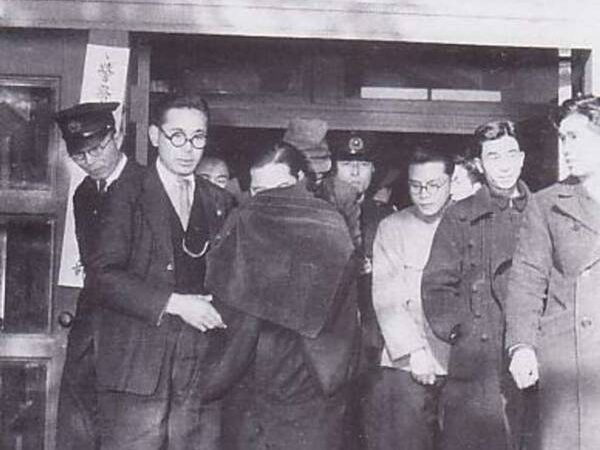
The Kotobuki scandal unraveled in January 1948 when Tokyo police discovered multiple infant remains. On January 15, 1948, midwife Miyuki Ishikawa and her husband were arrested after autopsies confirmed foul play. The investigation revealed shocking evidence: ashes of over 40 babies at a local mortician’s house and more hidden at a Tokyo temple. This grisly discovery ended Japan’s systematic postwar infanticide operation.
The Kotobuki Verdict: A Shocking Leniency

1948 Trial | Tokyo District Court
Despite evidence of 103+ infant deaths, Miyuki Ishikawa was convicted of just 5 murders by omission. Her initial 8-year sentence was reduced to 4 years on appeal. Husband Takeo Ito received only 2 years.
This controversial lenient sentencing – for one of Japan’s worst postwar crimes – sparked public outrage and remains a stain on occupation-era justice.
Key Figures in the Kotobuki Soap Murders
Miyuki Ishikawa
Head midwife at Kotobuki San’in. Orchestrated the infanticide-for-profit scheme.
Takeo Ito (Takeshi Ishikawa)
Ishikawa’s husband. Managed finances and accomplice in the postwar baby murder operation.
Dr. Shiro Nakayama
Corrupt physician who provided falsified death certificates, enabling the cover-up.
Legacy of Kotobuki: Shockwaves Through Postwar Japan
Public Outrage & Societal Reckoning
The trial exposed systemic failures in Japan’s welfare system and crushing pressures on postwar mothers, forcing national introspection about infant abandonment and poverty.
Legal Reforms
The scandal directly spurred stricter Japanese child welfare laws and heightened oversight of maternity institutions – a rare silver lining to the tragedy.
The Bitter Irony
History remembers the “Soap Murders” not for cleansing, but for a paperwork nightmare: falsified death certificates, burial permits, and bureaucratic complicity enabling infanticide.
The Hollow Accountability: Kotobuki’s Legal Aftermath
Miyuki Ishikawa
Head Midwife
Convicted of 5 murders → 4-year prison sentence (1948)
Takeo Ito (Takeshi Ishikawa)
Husband & Accomplice
Received 2 years imprisonment
Dr. Shiro Nakayama
Death Certificate Forger
Convicted – medical license revoked, fate obscured
Why “Soap” Murders? The Dark Irony Behind Kotobuki’s Name

The “Kotobuki Soap Murders” label is a grim historical accident – no soap was involved. The name emerged from 1940s Japanese media drawing sensational parallels to European killer Leonarda Cianciulli (“The Soap-Maker of Correggio”), who literally dissolved victims in lye.
In Kotobuki’s case, the only “lather” was a bureaucratic nightmare: falsified death certificates, burial permits, and ashes hidden in temples. The name endures as a cruel irony – evoking cleansing for Japan’s most paperwork-driven infanticide scandal.
Why Kotobuki Remained Japan’s Forgotten Scandal
Unlike the Zodiac Killer or Ted Bundy, the Kotobuki Soap Murders never captivated Western true crime audiences. The reasons cut deep:
- No “Charismatic Killer”: Ishikawa – a profit-driven midwife – lacked the sensational villainy Hollywood craves.
- Paperwork Over Panache: Falsified death certificates and bureaucratic neglect defy easy dramatization.
- Unfilmable Tragedy: Systemic infanticide and postwar societal collapse resist popcorn-friendly storytelling.
Result? A historically pivotal case remains a niche footnote – too grim even for the Serial era.
Conclusion: Kotobuki – Japan’s Forgotten Paperwork Tragedy
The Kotobuki Soap Murders stand as one of postwar Japan’s darkest chapters: a systematic infanticide operation masked by forged documents and societal indifference. Its ironic name – born from sensationalized 1940s media – obscures the real horror: profit-driven neglect enabled by bureaucratic complicity.
Unlike flashy Western true crime sagas, Kotobuki’s power lies in its chilling banality. This was evil hiding in plain sight: a respected midwife, routine death certificates, and ashes in temple urns. No soap, no cinematic villains – just the grinding machinery of postwar apathy exploiting Tokyo’s most vulnerable.
Some tragedies resist commodification. Kotobuki’s legacy isn’t memes or documentaries, but a stain on Japan’s reconstruction era that still whispers: the darkest crimes wear starched uniforms, not shadows.
Discover more from TrueVerses
Subscribe to get the latest posts sent to your email.