Introduction

The name Jack the Ripper evokes haunting images of gaslit alleys, shadowy figures, and the chilling fear that once gripped London’s Whitechapel district. In the autumn of 1888, the Ripper committed a series of brutal killings that became some of the most infamous unsolved murders in history. These crimes not only shocked Victorian London with their savagery but also exposed the dark underbelly of 19th-century British society, leaving a mystery that continues to fascinate true crime enthusiasts worldwide.
The Setting: Whitechapel in the Late 19th Century

Whitechapel, nestled in London’s East End, was a district plagued by extreme poverty, overcrowding, and urban neglect. Known as one of the city’s most dangerous and impoverished neighborhoods, it was rife with crime, vice, and social unrest. Thousands lived in squalid tenements, surviving through day labor, petty trade, and, for many women, prostitution.
Just steps away from the opulent City of London—the wealthiest square mile in the world—Whitechapel stood in stark contrast, its grinding poverty ignored by much of Victorian society. The slums became a breeding ground for disease, despair, and violence, remaining largely overlooked until the shocking Jack the Ripper murders of 1888 forced the world to confront the dark heart of the East End.
The Murders: Five Lives Lost

Between August and November 1888, five women were brutally murdered in London’s Whitechapel district, in crimes so savage they horrified not just the city but the entire world. These victims—Mary Ann Nichols, Annie Chapman, Elizabeth Stride, Catherine Eddowes, and Mary Jane Kelly—are known as the “canonical five” of the Jack the Ripper murders. They are distinguished from other, less certain victims attributed to the Ripper, forming the core cases in one of history’s most infamous unsolved serial killings.
The Victims: An Overview
| Name | Date Found | Location | Notable Details |
| Mary Ann Nichols | 31 August 1888 | Buck’s Row | Throat cut, severe abdominal injuries |
| Annie Chapman | 8 Sept 1888 | Hanbury Street | Throat cut, body mutilated, uterus removed |
| Elizabeth Stride | 30 Sept 1888 | Berner Street | Throat cut, less mutilated than others |
| Catherine Eddowes | 30 Sept 1888 | Mitre Square | Throat cut, facial and abdominal mutilations |
| Mary Jane Kelly | 9 Nov 1888 | Miller’s Court | Throat cut, extensive mutilations, organs removed |
The defining feature of the Jack the Ripper murders was their shocking brutality. Most victims were attacked on the streets of Whitechapel, their throats slashed from left to right, often followed by grotesque mutilations. In at least three cases, internal organs were removed, leading some investigators to believe the killer possessed medical or anatomical knowledge. The violence, concentrated within just a one-mile radius in 1888 London, left the public terrified and the Metropolitan Police utterly baffled, cementing the case as one of the most chilling chapters in true crime history.
The Investigation: Panic in the Streets

The Metropolitan Police and the City of London Police joined forces in a desperate manhunt for Jack the Ripper. Law enforcement faced immense pressure, not only from a terrified public but also from sensationalist Victorian newspapers that fueled fear and outrage. Authorities received hundreds of letters, some claiming to be from the killer himself—most famously, the “Dear Boss” letter, which first introduced the now-infamous name Jack the Ripper. Whether these letters came from the real murderer or were elaborate hoaxes has never been proven, but they helped immortalize the case, cementing it as one of the most enduring mysteries in true crime history.
Despite deploying massive manpower, conducting midnight patrols, and carrying out door-to-door searches, the police investigation into the Jack the Ripper murders was severely hindered by a lack of evidence, primitive forensic methods, and a Whitechapel community suspicious of law enforcement. The killer’s distinctive patterns—the timing of attacks, brutal ferocity, and victim selection—only intensified public fear. Authorities offered rewards, activated informants, and interrogated numerous suspects, yet the elusive murderer always stayed one step ahead, deepening the mystery surrounding the 1888 Whitechapel killings.
The Legacy of Fear: Newspapers and Public Reaction

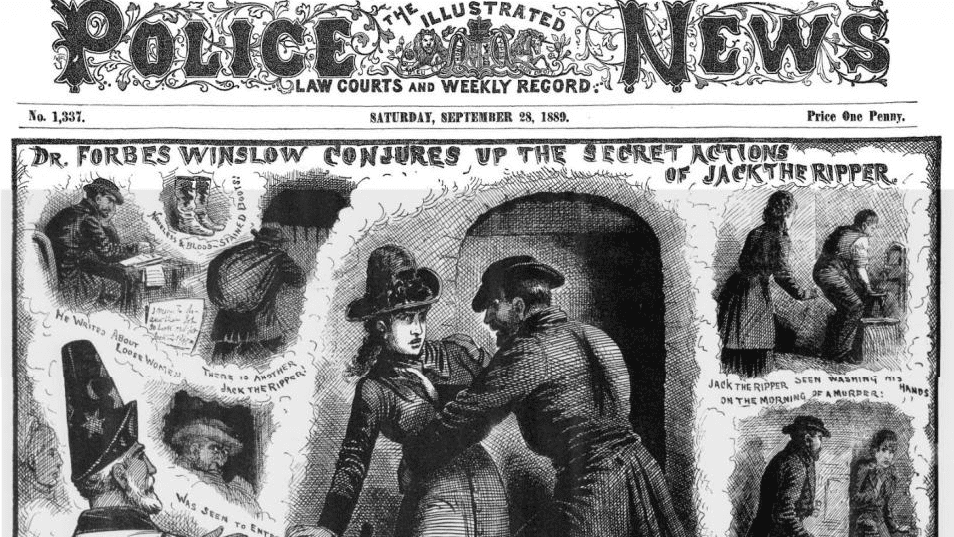
The Jack the Ripper murders were among the earliest crimes to receive extensive coverage by the rapidly growing Victorian tabloid press. Newspapers capitalized on public fascination, fueling fear by publishing graphic details, alleged clues, and wild speculation. This sensational coverage helped create a unique kind of folklore, turning a local Whitechapel tragedy into an enduring global true crime legend that continues to captivate audiences worldwide.
Headlines blared sensational warnings and speculated on Jack the Ripper’s motives. Dubious clues, false arrests, and rumors—even some spread by law enforcement—created an atmosphere where trust was scarce and facts were hard to find. The Victorian press shaped the narrative, transforming the Ripper into both a terrifying monster and an enduring myth in true crime history.
The Suspects: Many Faces, No Names

From the very beginning, the question “Who was Jack the Ripper?” captivated the public imagination. Over the years, more than 100 suspects have been proposed in the hunt for the notorious Whitechapel serial killer. Early theories focused on local residents, vagrants, and butchers—reflecting the brutal nature of the murders and the demographics of 1888 Whitechapel. Later speculation widened to include Polish immigrants, unemployed doctors, and even members of British royalty, fueling endless debate and mystery in one of history’s most famous unsolved cases.
One of the most intriguing theories about Jack the Ripper is that the killer possessed anatomical expertise, suggesting he may have been a surgeon, mortuary worker, or medical student. However, modern historians have increasingly challenged these assumptions. For example, Hallie Rubenhold’s recent research argues that only one of the canonical five victims was definitely a prostitute, and that much of the popular narrative surrounding the murders may be shaped more by Victorian prejudices than by historical fact.
Despite exhaustive investigations, no suspect has ever been definitively proven to be Jack the Ripper, leaving the mystery unsolved to this day. This enduring enigma has inspired countless books, films, and academic studies, keeping public fascination alive over a century later. The unresolved nature of the case continues to captivate historians, true crime enthusiasts, and conspiracy theorists alike.
The Lives of the Victims
While the myth of Jack the Ripper has long captured public imagination, recent historians emphasize the importance of remembering the victims as real people—not just characters in a grisly legend. These women were daughters, mothers, and members of London’s working poor, whose lives reflected the harsh realities of Victorian London. Their stories highlight the vulnerability, marginalization, and struggles against poverty, addiction, and social neglect faced by countless women during that era.
The emphasis on the victims’ status as prostitutes stemmed largely from Victorian-era reporting biases and the limited perspectives of contemporary investigators. Today, historians recognize the complexities of these women’s lives—marked by hardship, resilience, and survival—inviting empathy and a deeper understanding of Victorian society beyond just the identity of Jack the Ripper. This broader view helps shed light on the social conditions that shaped their tragic stories.
The Aftermath: Social Change and Enduring Mystery
Social Awareness and Reforms
The Jack the Ripper crimes cast a harsh, unflinching light on the dire living conditions of London’s poor. The shocking murders made the problems of Whitechapel—including overcrowding, deprivation, and systemic neglect—impossible for the public to ignore. These brutal crimes sparked widespread debates about social reform, police practices, and the vulnerability of impoverished women. They forced many middle- and upper-class Londoners to confront the harsh realities lurking just beyond their affluent neighborhoods in Victorian London.
The Legend Endures
More than 130 years later, the legend of Jack the Ripper continues to cast a long shadow over London and beyond. Ghost tours, themed exhibitions, and cultural events draw countless tourists eager to explore the infamous Whitechapel murders. Authors and filmmakers revisit the case repeatedly, speculating on new evidence and reexamining old theories. The unsolved nature of the murders has cemented Jack the Ripper as one of the most notorious and studied crimes in English history and true crime lore.
Why Does Jack the Ripper Endure?

Unsolved Mystery: The killer’s identity remains unknown, sparking endless curiosity and speculation.
Media Influence: Victorian newspapers and modern media kept the gruesome details in the public eye, fueling the legend.
Societal Reflection: The murders exposed the stark contrast between the wealth of Victorian London and the brutal poverty and injustice in areas like Whitechapel.
Enduring Human Fascination: True crime stories with elements of myth and horror have a timeless appeal, captivating audiences across generations.
Conclusion
Although Jack the Ripper’s crimes lasted only a brief few months in 1888, their shockwaves continue to ripple through history. This case is about far more than a faceless murderer—it reflects deeper themes of social inequality, fear, and humanity’s need to make sense of the incomprehensible. The tragedy of Whitechapel’s autumn of terror reveals as much about Victorian society as it does about one man—or perhaps one enduring myth.
Today, Jack the Ripper remains London’s most haunting shadow: a chilling figure at the crossroads of real horror and the stories we tell ourselves to face the unknown.
Discover more from TrueVerses
Subscribe to get the latest posts sent to your email.